" transform="translate(3 2)" width="14px"/></svg>)
Keynote

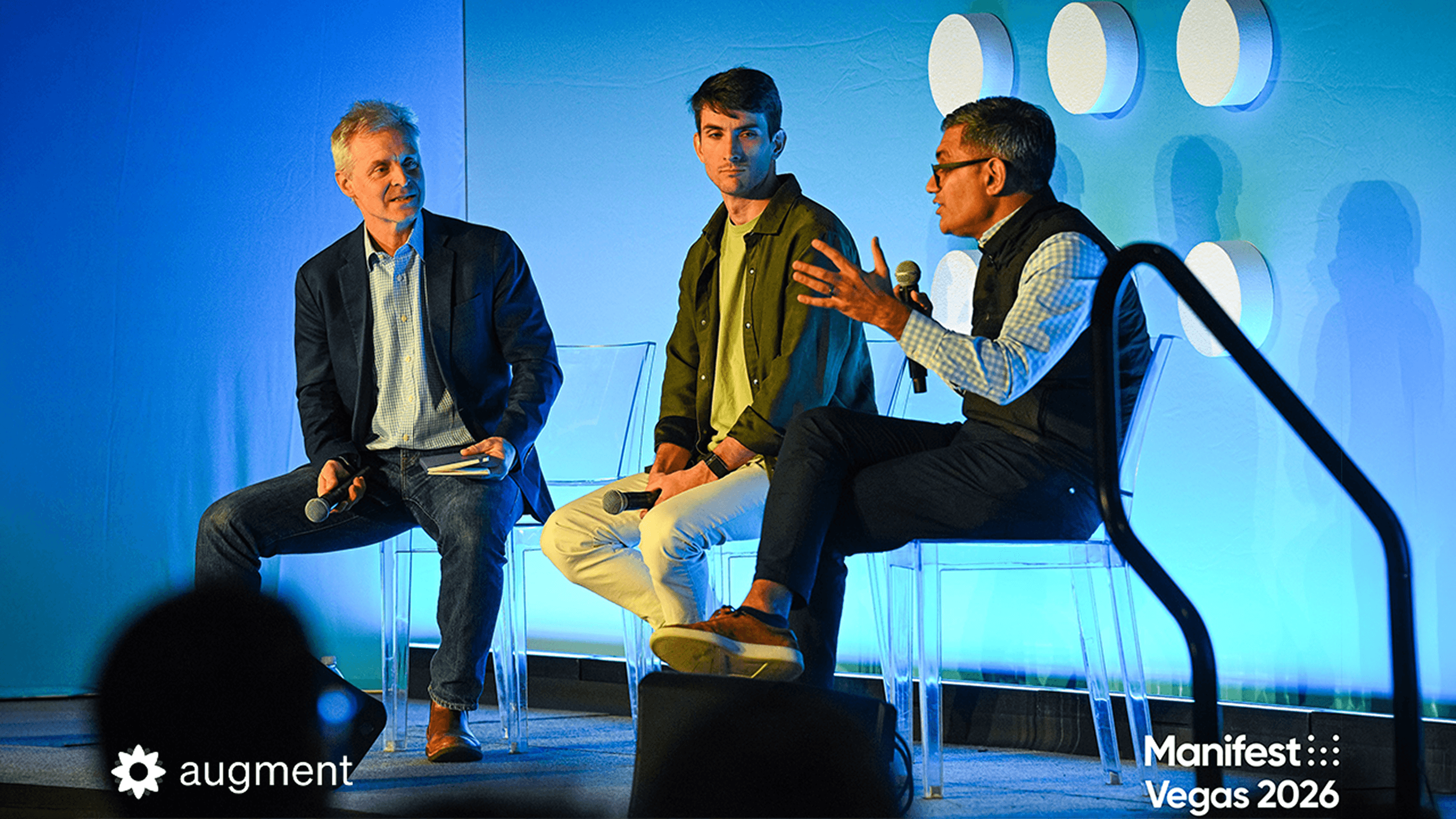
From hype to ROI: Agentic AI in logistics - Manifest 2026 panel recap
Harish Abbott at Manifest 2026 on where agentic AI is delivering real ROI in logistics, what's slowing adoption, and how leaders can drive measurable results.

Newsroom
Augment
Agentic AI in Logistics, Real-World ROI & Organizational Adoption
At Manifest 2026, Harish Abbott delivered a thoughtful and grounded discussion on the evolving role of agentic AI in enterprise environments, especially in supply chain and logistics. His insights spanned both emerging capabilities and practical adoption hurdles that many leaders face today.
Here are the key takeaways:
Agentic AI: Reasoning + Action
Harish began by clarifying what makes agentic AI different. It’s not just about generating responses or automating tasks, it’s about the ability to reason and take action autonomously. Instead of surfacing insights for humans to interpret, agentic systems can evaluate options, make decisions, and move work forward.
In supply chain and logistics environments, that shift has real implications. Teams are already applying agentic AI to exception management, dynamic routing, forecasting adjustments, and cross-functional coordination, moving from visibility to execution.
Adoption Is an Organizational Challenge
Despite the momentum, progress hasn’t been as fast as many predicted. The bottleneck isn’t the technology, it’s alignment.
AI can’t simply be positioned as “good for everyone.” It has to tie directly to performance metrics, job responsibilities, and incentives. Where incentives are clear and measurable, adoption accelerates. Where they’re vague, initiatives stall.
This shift is also showing up commercially. AI maturity is beginning to differentiate companies in RFPs, and customers increasingly expect measurable impact, improved service levels, predictability, cost efficiency, and tangible ROI.
At the same time, the skills landscape is evolving. Organizations are investing in AI orchestration, data operations leadership, and hybrid teams that strengthen human–machine collaboration rather than replace it.
Final Advice: Start Now
Harish closed with a simple but urgent message: start now.
The data doesn’t need to be perfect. What matters is building momentum, aligning incentives early, and bringing teams along in the process.
The companies willing to move, even imperfectly, are the ones positioning themselves to pull ahead.
Meet Augie, the AI teammate built for supply chain.
Augie handles the daily grind so your operators can focus on service and scale.